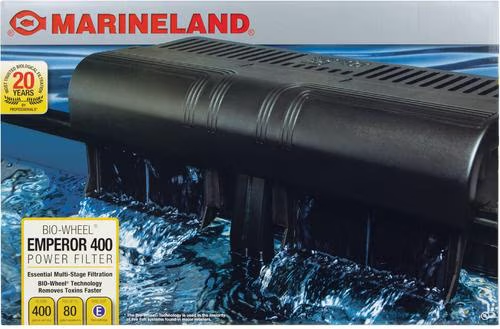
Marineland Emperor Bio-Wheel Canister Filter
Disclosure: This page contains affiliate links. If you buy through them, we may earn a commission at no extra cost to you. As an Amazon Associate we earn from qualifying purchases.
Appears in these guides
Review
The Marineland Emperor Bio-Wheel Canister Filter is presented as a canister-style external filter that focuses on biological and mechanical filtration with user customization in mind. This draft review highlights how the design and feature set are commonly described by users and retailers, and is intended to help you decide whether it matches your needs.
Who it is for: this unit may suit hobbyists who prefer external filtration and like the idea of a dedicated biological stage. It can be a reasonable match for aquarium owners who want the option to arrange multiple media types, who do routine maintenance, and who appreciate a visible biological element such as a rotating Bio-Wheel.
Key features to note include a Bio-Wheel intended to support beneficial bacteria, stacked media chambers for mechanical and chemical media, and user controls that allow flow adjustments. The layout typically allows swapping and arranging media trays to prioritize mechanical, chemical, or biological filtration depending on the tank setup and stocking level.
Performance impressions from owners often point to solid biological processing when the wheel is kept oxygenated and media is maintained. Mechanical filtration efficiency depends on media choice and how often the filter is cleaned. Flow and noise characteristics can vary with installation and hose routing, so placement and hose length can influence how quietly the unit runs.
Usability is generally straightforward for users familiar with canister filters. Setup involves routing hoses, seating seals, and priming. Routine use tends to require periodic checks of seals and connections to avoid leaks. The Bio-Wheel can add a visual cue to biological activity but will need consistent water flow to remain effective.
Maintenance: expect regular cleaning of mechanical media and occasional rinsing or replacement of chemical media as needed. The Bio-Wheel may collect detritus over time and should be inspected during service. What to watch out for includes making sure O-rings and clamps are seated correctly to prevent slow leaks, avoiding over-compaction of media which reduces flow, and confirming replacement parts and spare media trays are accessible for your long term needs.
- Quick takeaways
- Bio-Wheel provides a dedicated biological stage, but requires flow and oxygenation to work well.
- Multiple media trays allow customization but add complexity to media changes.
- Proper sealing and hose routing are important to avoid leaks and noise.
- Routine maintenance is needed to preserve flow and biological performance.
This draft review was generated by AI and should be verified against manufacturer specifications and current user reviews.
Pros
- Dedicated Bio-Wheel stage for biological filtration potential
- Multiple removable media trays for customization
- Adjustable flow control to tune output
- External canister keeps aquarium display cleaner
Cons
- Bio-Wheel effectiveness depends on continuous flow and oxygenation
- Can require frequent priming and careful sealing during maintenance
- Media trays add complexity to cleaning and reassembly
- Replacement parts and accessories may not be readily available in all areas