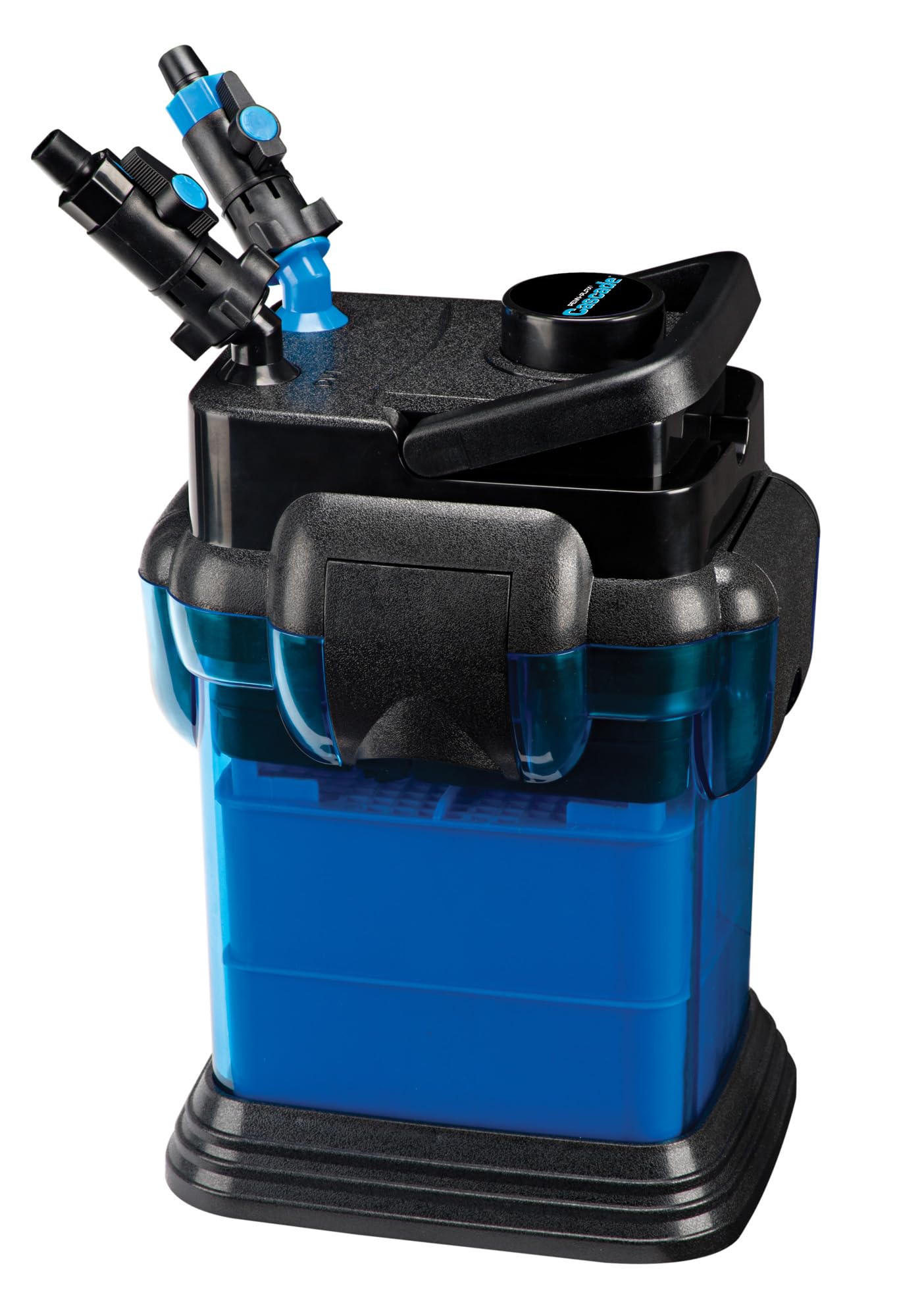
Penn-Plax Cascade Canister Filter
Disclosure: This page contains affiliate links. If you buy through them, we may earn a commission at no extra cost to you. As an Amazon Associate we earn from qualifying purchases.
Appears in these guides
Review
Who this is for: The Penn-Plax Cascade Canister Filter is a draft review for aquarium hobbyists who want an external canister-style filter that supports layered media and keeps equipment out of the tank. It may appeal to people who prefer modular media options and who are comfortable with a slightly more involved initial setup than internal or hang-on-back filters.
Key features: The design centers on multi-stage filtration and removable media trays so users can configure mechanical, chemical, and biological media. The unit is built as a sealed canister to contain water, and it routes water through inlet and outlet plumbing with standard connectors to keep hoses tidy and allow placement under a stand.
- Media baskets for layered filtration (mechanical, chemical, biological)
- Sealed canister body to reduce the risk of spills
- Removable trays to customize media layout
- Standard hose and connector fittings for external plumbing
- Compact footprint intended for under-stand placement
Performance: In general, canister-style filters like this are capable of steady, continuous filtration and can maintain water clarity when matched appropriately to tank size and stocking levels. Actual performance will depend on media choices, how often media are cleaned, and matching the unit to the aquarium's bioload. Expect that flow and noise characteristics can change if the unit becomes partly clogged or if air is trapped in the system.
Usability: Assembly and installation usually take longer than plug-and-play internal filters but follow a predictable process: connect hoses, position the canister, prime according to the manual, and check for leaks. Once installed, routine operation is straightforward, though first-time priming and managing hose routing may take a short learning curve. The canister's access points and trays affect how easy it is to add or rearrange media.
Maintenance: Maintenance typically involves regular rinsing of mechanical media, periodic replacement of chemical media, and occasional cleaning of biological surfaces without over-cleaning useful bacteria. Check seals and the O-ring at each service to prevent leaks, and follow any recommended lubrication practices in the manual. Frequency of maintenance varies with tank stocking; heavier bioloads will require more frequent attention.
What to watch out for: Be attentive to seals and hose connections because these are common sources of drips or leaks if not seated correctly. Priming can trap air and cause noise or reduced flow; following the manufacturer priming instructions helps. Confirm model specifications and replacement part availability before purchase, and avoid running the motor dry during setup or service.
This draft review was generated by AI and should be verified against official product documentation and specifications.
Pros
- Modular media baskets allow custom filtration setups
- Sealed canister reduces visible equipment in the tank
- Compact footprint fits under many stands
- Designed for multi-stage filtration
- Accessible trays simplify media changes
Cons
- Initial priming and setup can be fiddly for new users
- Seals and O-rings require periodic inspection
- Can be noisy if air is trapped or hoses are kinked
- Maintenance is more involved than simple internal filters