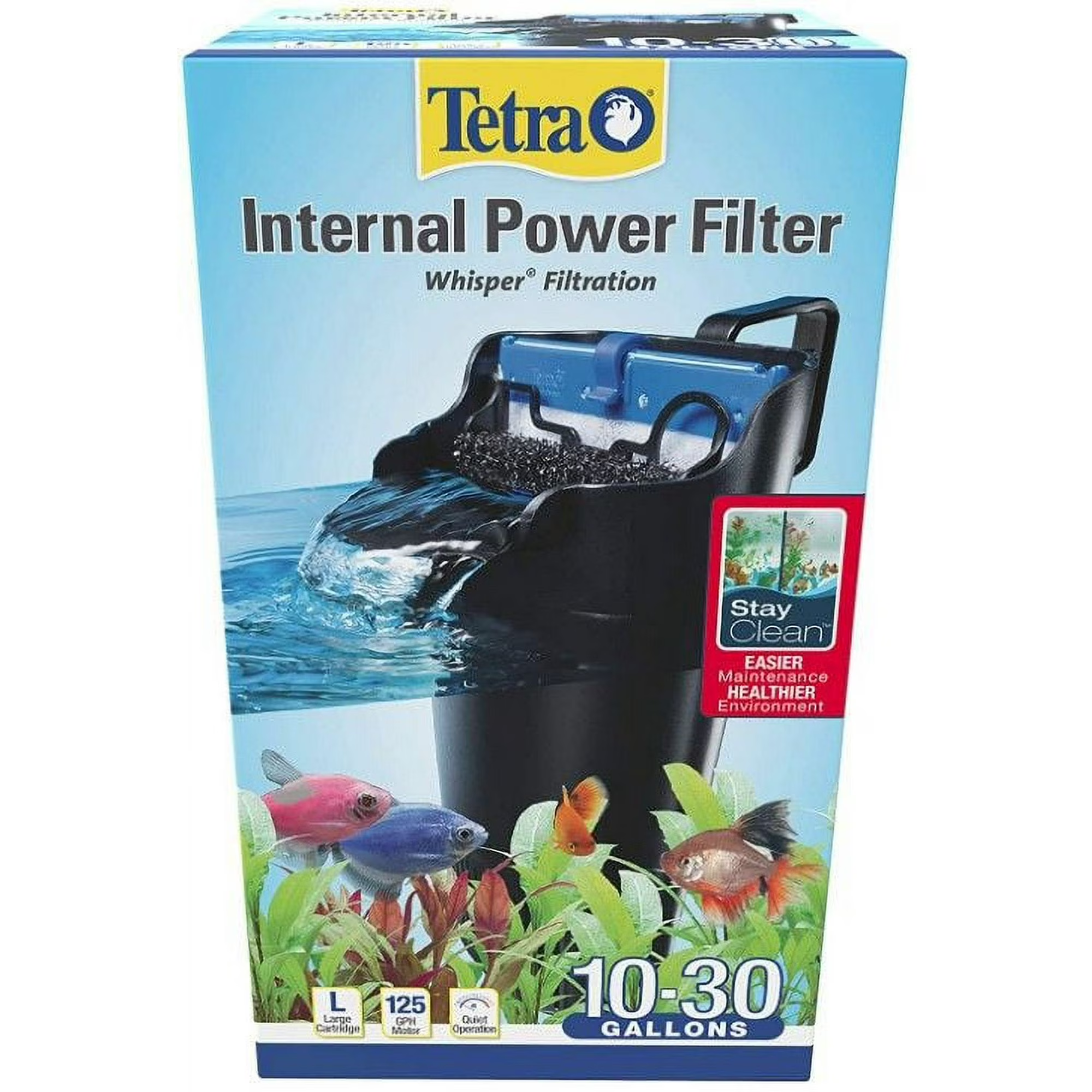
Tetra Whisper In-Tank Power Filter
Disclosure: This page contains affiliate links. If you buy through them, we may earn a commission at no extra cost to you. As an Amazon Associate we earn from qualifying purchases.
Appears in these guides
Review
The Tetra Whisper In-Tank Power Filter is aimed at hobbyists who keep small to medium freshwater aquariums and want a compact, self-contained filter that fits inside the tank. It often appeals to beginners because installation and routine care are straightforward. It can also be useful for quarantine or hospital setups where a simple, reversible filter is helpful.
Key features include an in-tank, space-saving design, a removable cartridge and sponge for mechanical and chemical polishing, and a flow-adjustment control to tune circulation. The unit is built to sit inside the aquarium so there is no external plumbing to route. Replacement media are designed to be easy to swap, which supports quick maintenance sessions.
In everyday use the filter typically provides basic mechanical and chemical filtration and creates water movement across the intake and outlet. It may handle light to moderate bioloads well, but the internal media space is limited compared with larger canister or hang-on-back filters. Owners report adequate circulation for small community tanks, but performance depends on stocking density and feeding habits.
Usability is straightforward: position the filter on the tank wall, ensure the intake is submerged, and plug it in. The adjustable flow knob lets you dial back current for delicate species or fry, and the removable cartridge and sponge make cleaning a step-by-step process. Take care with placement so the unit is secure and not pressing hard against the glass, which can transmit vibration.
Maintenance is simple but should be regular. Inspect the sponge and cartridge visually and feel for reduced flow during weekly checks. Rinse the sponge in tank water to preserve beneficial bacteria and replace the cartridge when it becomes clogged or discolored. Replacement frequency will vary with bioload, feeding, and tank conditions, so monitor water quality rather than relying on a fixed interval.
What to watch out for includes limited media capacity relative to larger filters, possible vibration or rattle if not seated properly, and the need to keep the water level high enough for in-tank operation. Very small fish or fry might be stressed by strong intake currents unless a sponge prefilter or lower flow setting is used. Also confirm compatibility with your tank wall thickness and dimensions before buying.
- Compact in-tank footprint saves space and hides the unit inside the aquarium
- Removable cartridge and sponge for basic mechanical and chemical filtration
- Adjustable flow control helps adapt to different species and tank conditions
- Simple installation and straightforward maintenance routine
- Limited media capacity compared with larger external filters
This draft review was generated by AI and should be verified against official specifications and user reviews.
Pros
- Compact in-tank design for neat setup
- Adjustable flow control for delicate or small inhabitants
- Includes removable sponge and cartridge for easy swaps
- Simple installation without external plumbing
Cons
- Limited internal media capacity for biological filtration
- May need frequent cartridge changes in heavily stocked tanks
- Can transmit vibration if not secured against glass
- Not suitable as sole filter in larger or heavily stocked aquaria