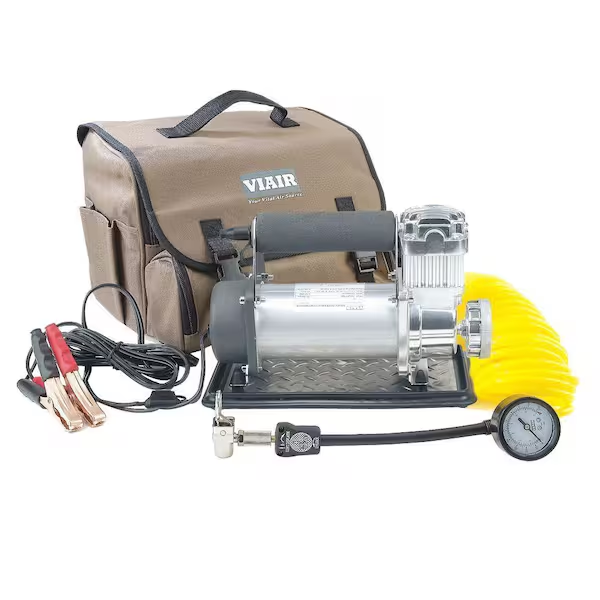
Viair 400P Portable Compressor
Disclosure: This page contains affiliate links. If you buy through them, we may earn a commission at no extra cost to you. As an Amazon Associate we earn from qualifying purchases.
Appears in these guides
Review
Who this is for: The Viair 400P Portable Compressor is aimed at drivers and outdoor enthusiasts who want a compact inflator to keep in a trunk or gear kit. It is useful for people who need a portable solution for topping off passenger car, SUV, ATV, and light truck tires while traveling, camping, or after light off road use.
Key features: The unit focuses on portability and basic inflation functions. It is designed to be carried and stored without taking much space, and it includes an on-unit pressure indicator and a hose and fittings intended for common tire valves. Controls and connections are kept simple so a user can get a tire inflatable without a lot of setup.
Performance: In typical light vehicle situations the compressor can bring a low or soft tire back to a safe driving pressure. Expect it to perform well for topping up tires and for occasional use. Like most compact inflators, it is not a replacement for a shop compressor and may take significantly longer when inflating very large or heavily underinflated tires. It can also become warm with extended runs, so duty cycle limits should be respected.
Usability: The 400P is built for straightforward, occasional roadside use. Connection to a vehicle power source and the valve is usually quick, and the controls are simple to operate. Its size makes it easy to keep in the trunk and access in an emergency. Reading the included quick start and safety instructions before first use will help avoid common setup mistakes.
Maintenance: Basic care helps reliability. Keep the unit and hose clean and dry, inspect the hose and fittings for leaks before use, and store it in a dry place. Allow the compressor to cool if it gets hot and follow any recommended duty cycle from the manual. Periodic checks of connections, fuse, and the integrity of the pressure indicator will help ensure it works when needed.
What to watch out for: Compact compressors are convenient but have limits. Watch the duty cycle to avoid overheating, do not expect rapid inflation of large truck or commercial tires, and be aware that performance can vary by ambient temperature and battery or outlet condition. Also verify that the vehicle outlet you plan to use is rated for the compressor draw and check any model-specific installation notes.
- Portable form factor for easy trunk storage
- Integrated pressure indicator for basic monitoring
- Simple hose and valve connections for common tires
- Best suited to passenger vehicles, SUVs, ATVs, and light trucks
- Not intended as a replacement for workshop compressors
- Requires attention to duty cycle to prevent overheating
This draft review was generated by AI and should be verified against official product information and the user manual.
Pros
- Compact and easy to store in a vehicle
- Integrated pressure indicator for quick checks
- Simple hookups for common tire valves
- Good for emergency topping up of passenger tires
Cons
- Can heat up with extended use
- Slower on large or heavily underinflated tires
- May depend on vehicle outlet capacity
- Not a substitute for a full shop compressor